
The Longevity of Belonging: Why Relationships May Be the Most Important Pillar
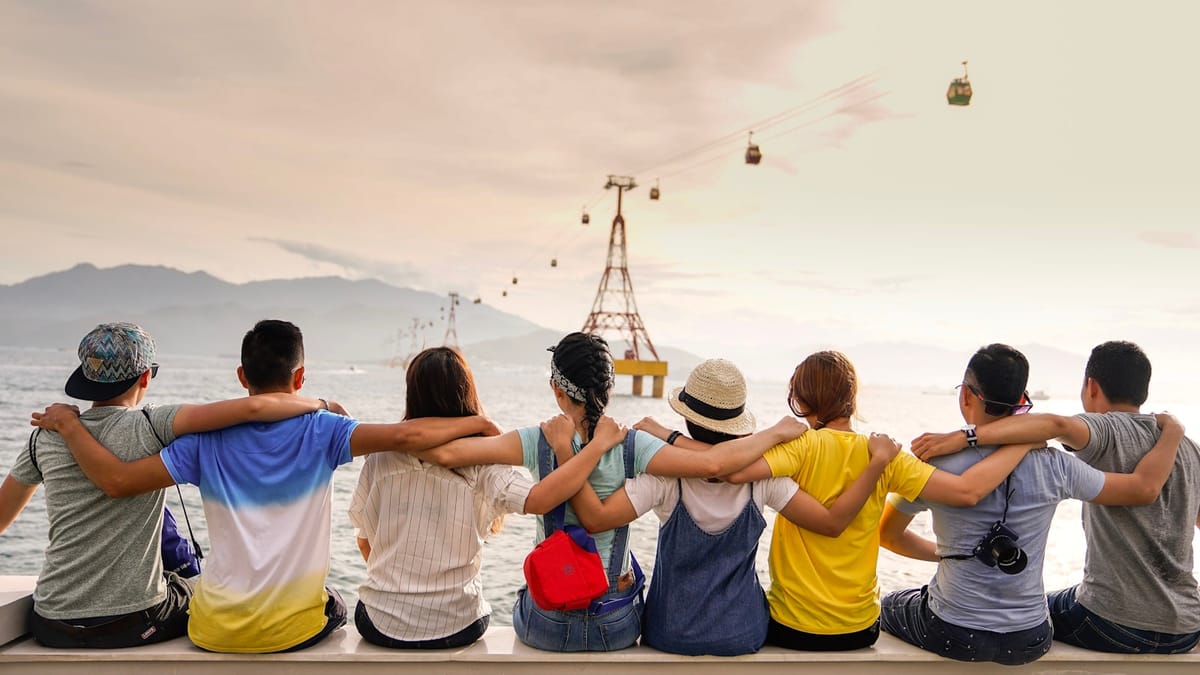
In 2023, the U.S. Surgeon General published an advisory he called "Our Epidemic of Loneliness and Isolation." He cited data showing that nearly half of American adults report measurable loneliness. He compared the mortality risk to smoking 15 cigarettes a day.
The advisory wasn't a soft call for more phone time. It was a public health alarm backed by decades of research. The evidence that social connection extends life is, at this point, some of the strongest in all of longevity science.
Most people don't treat their relationships as a health intervention. They should.
The Data Is Stark
In 2010, psychologist Julianne Holt-Lunstad at Brigham Young University published a meta-analysis in PLOS Medicine covering 148 studies and more than 308,000 participants. The finding: people with strong social relationships had a 50% greater likelihood of survival compared to those with weaker social ties.
Let that sink in. Not 5%. Not 10%. Fifty percent.
The effect size exceeded the protective benefits of regular exercise. It exceeded the mortality risk from obesity. It was comparable to quitting smoking. And it held across age groups, cultures, and health conditions.
Holt-Lunstad followed up with a second analysis in Perspectives on Psychological Science (2015), this time covering 70 studies and 3.4 million people. The conclusion: social isolation and loneliness are now a greater public health risk than physical inactivity. The mortality hazard ratio for loneliness (1.26) is on par with obesity.
The science on this has been remarkably consistent for 15 years.
84 Years of Following the Same People
The Harvard Study of Adult Development is the longest-running longitudinal study of adult life ever conducted. It began in 1938, tracking 268 Harvard sophomores and 456 Boston inner-city youth across their entire lifespans. Over eight decades of follow-up, researchers measured health, wealth, relationships, career outcomes, and wellbeing.
The study's current director, psychiatrist Robert Waldinger, summarized the findings in a TED Talk watched by more than 45 million people, and later in his 2023 book The Good Life, co-authored with Marc Schulz.
The central finding: the quality of close relationships was the most consistent predictor of healthy aging. Not wealth. Not IQ. Not social class. The people who aged best were those who had warm, reliable connections to others.
One finding stands out above the rest: participants who were most satisfied in their relationships at age 50 were the healthiest at age 80, physically, cognitively, and emotionally. The relationship satisfaction measure at midlife was a better predictor of late-life health than cholesterol levels, blood pressure, or smoking status.
The data from 84 years of one study is hard to argue with.
The Biology: How Belonging Protects You
Social connection doesn't just feel good. It changes your physiology.
Inflammation. In 2015, Steven Cole at UCLA published research in PNAS showing that loneliness altered the expression of immune-related genes, shifting the body toward a chronic pro-inflammatory state. The mechanism: social threat activates some of the same biological responses as physical threat, including elevated cortisol and sympathetic nervous system activation. When loneliness is chronic, so is that activation.
Cortisol regulation. Social support acts as a biological buffer against stress. Multiple controlled studies have shown that performing a stressful task with a trusted companion present produces significantly lower cortisol responses than doing it alone. This extends to everyday life: people with strong social networks show better cortisol rhythms across the day, with more appropriate morning peaks and better evening recovery.
Cognitive protection. David Bennett at Rush University Medical Center led the Rush Memory and Aging Project, following 1,138 older adults over several years. People with a strong sense of purpose in life had a 2.4x lower rate of Alzheimer's disease compared to those without. Purpose and social connection are biologically intertwined: most sources of meaning involve other people. The loneliness that comes from social isolation is one of the most consistent predictors of cognitive decline in the aging literature.
Immune function. The Carnegie Mellon psychologist Sheldon Cohen conducted a classic experiment: he exposed 276 volunteers to a cold virus and tracked who got sick. Participants with more diverse social networks were significantly less likely to develop a cold, even after controlling for health behaviors. Diversity of social connection (knowing people across different life domains) was more protective than the size of the network.
The Purpose Dimension
The five Blue Zones, the regions identified by researcher Dan Buettner where people consistently live past 100 in good health, share something that goes beyond diet and exercise.
In Okinawa, Japan, the concept of moai describes lifelong social support groups: clusters of five or six people who commit to each other's wellbeing for life. In Sardinia, daily rituals revolve around extended family and communal meals. In Loma Linda, California, Seventh-day Adventists gather for weekly Sabbath observance. In Nicoya, Costa Rica, a strong plan de vida (plan for life) is culturally embedded from early age.
What these places share isn't a supplement stack. It's structural belonging and a built-in reason to show up.
The concept of ikigai, roughly translated from Japanese as "reason for being," has been studied as a longevity predictor in its own right. A 2008 study in Psychosomatic Medicine by Sone et al. followed 43,000 Japanese adults and found that those who reported a strong sense of ikigai had significantly lower all-cause and cardiovascular mortality over seven years of follow-up, independent of health behaviors.
Purpose predicts longevity partly because it shapes daily behavior. People who feel their lives are meaningful tend to sleep better, maintain social ties, stay physically active, and seek medical care when something goes wrong. Purpose acts like an upstream regulator for nearly every health behavior.
Auditing Your Social Health
The Holt-Lunstad research is specific about one thing: it's the quality of relationships that drives outcomes, not the quantity. Having 800 social media followers doesn't move the biological needle. What matters is the depth and reliability of close ties.
Robert Waldinger offers a useful frame: who would you call at 3 AM if you were in crisis? For many people, the honest answer is one or two names. Sometimes none.
Three questions worth sitting with:
1. Who knows how you're actually doing? Not the polished version you present publicly. How many people in your life know what you're genuinely struggling with, and when did you last talk to them?
2. What do you contribute to others? The longevity data on giving is as strong as the data on receiving. Volunteering, mentoring, and caregiving are each associated with mortality benefits comparable to being on the receiving end of strong social support. Social health isn't passive.
3. Is your connection structural or willpower-dependent? The Blue Zones lesson is that the healthiest communities don't rely on individual motivation to stay connected. A weekly dinner, a running club, a religious community, a long-standing sports team. Habitual belonging outlasts good intentions.
This Week's Action
Reach out to one person you haven't spoken to in three or more months. Not a text. A phone call, or at minimum a voice message.
Organizational psychologist Adam Grant has studied "dormant ties," relationships that exist but have gone quiet, and found that reactivating them often provides more fresh perspective and energy than our most active relationships. The person exists in your life. The connection just needs a signal.
It doesn't need to be long. Five minutes counts. A relationship that exists is stronger than one that doesn't.
Social health doesn't improve passively. It requires investment, the same way physical health does. But unlike most longevity interventions, this one requires nothing but a phone and a few minutes you almost certainly have.
Play the long game. — TLG 🧬